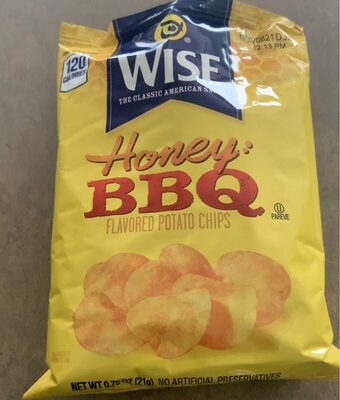
HONEY BBQ FLAVORED POTATO CHIPS, HONEY BBQ — Profile D | Nutrition facts · Wise Foods, Inc. | BetterBite
Wise Foods, Inc.
D
ProfileConcern
HONEY BBQ FLAVORED POTATO CHIPS, HONEY BBQ
Snacks & Chips USVerified
Label Serving
21 g
Barcode
041262271852
Data last verified: 1 Oct 2026
Important Disclaimer
BetterBite provides nutritional transparency insights based on publicly available data from regulatory databases (FDA, USDA, EFSA, WHO), published peer-reviewed research, and manufacturer-declared product information. This platform is designed for educational and informational purposes only.
The content displayed on this platform does not constitute medical advice, diagnosis, or treatment recommendations. Transparency scores, nutritional assessments, and ingredient analyses represent algorithmic interpretations of publicly available data and should not be used as a substitute for professional medical or nutritional guidance.
Individual dietary needs, allergies, and health conditions vary significantly. Always consult a qualified healthcare professional, registered dietitian, or physician before making dietary changes based on information found on this platform. Product formulations may change without notice — always verify information against current product labels.
AI Research Disclosure: Technical analysis and research patterns on this page are synthesized using BetterBite AI researchers.AI can make mistakes or provide incomplete insights.This technology aggregates data from scientific literature for informational assistance. Always verify findings against primary sources for critical dietary decisions.
Nutritional values transcribed from the product label. Actual values may vary.
% Daily Value
Share of an average adult's daily allowance in one serving (21 g) — the label's %RDA
Energy & macronutrients
Energy120 kcal6%
Total Fat8g10%
Saturated Fat1.5g7%
Trans Fat0gLow0%
Cholesterol0mgLow0%
Carbohydrates11gLow4%
Total Sugars2gLow4%
Dietary Fiber1.01g4%
Protein1g2%
Sodium140mg6%
Minerals
Calcium0mg0%
Iron0mg0%
Remaining vitamins and trace minerals: US FDA Daily Values. Low = under 5% of a day in one portion · High = 20% or more. Reference values, not medical advice.
Ingredient Transparency
Tap any row · FDA, USDA, EFSA, WHO
18 / 19 researched · AI analyzing 1 more...
Ingredients — as printed on the label
POTATOES, VEGETABLE OIL (CONTAINS ONE OR MORE OF THE FOLLOWING: CORN, COTTONSEED, SUNFLOWER, SOYBEAN OR CANOLA OIL), SUGAR, SALT, HONEY, FRUCTOSE, DEXTROSE MONOHYDRATE, WHEAT STARCH, MONOSODIUM GLUTAMATE (FLAVOR ENHANCER), TOMATO POWDER, ONION POWDER, MALTODEXTRIN, YELLOW 5 LAKE, GARLIC POWDER, EXTRACTIVES OF PAPRIKA, SOYBEAN OIL, CITRIC ACID, NATURAL FLAVOR, BARLEY MALT FLOUR.
Primary food ingredient, source of complex carbohydrates, thickening agent (starch), and texturizer in processed foods.
2
Vegetable Oil
Low
Cooking medium, texture enhancer, frying agent, and carrier for flavors in processed foods.
3
Sugar
Moderate
Sweetener, texturizer, preservative, and browning agent
4
Salt
Moderate
flavour enhancer, preservative, texture modifier, and fermentation controller
5
Honey
Low
sweetener / flavor / humectant
6
Fructose
Moderate
Sweetener and humectant
7
Dextrose Monohydrate
Low
Sweetener, texturizer, and energy source in food products.
8
Wheat Starch
LowAllergen
Thickening agent, stabilizer, gelling agent, and texture modifier in food products.
9
Monosodium Glutamate
E621
No Notables
flavour enhancer
10
Tomato Powder
No Notables
Flavour enhancer, natural colorant, and seasoning base
11
Onion Powder
No Notables
Flavour enhancer, aromatic base, and natural seasoning agent in food preparation.
12
Maltodextrin
INS 1400
Low
bulking agent, thickener, stabilizer, texturizer, and carrier for flavors
13
Yellow 5 Lake
E102
Low
Coloring agent
14
Garlic Powder
No Notables
Flavour enhancer and seasoning agent
15
Soybean Oil
Low
Cooking medium, texture enhancer, frying agent, and carrier for flavors in processed foods.
16
Extractives Of Paprika
Under Review
AI summary pending...
17
Natural Flavor
No Notables
flavour
18
Citric Acid
E330
No Notables
Flavour enhancer, acidity regulator, and preservative
19
Malted Barley Flour
LowAllergen
Flavour enhancer, enzyme supplement, and dough conditioner in baking.
Ingredient
Concern
Function
Notes
1
Potatoes
✓No Notable Concerns
Primary food ingredient, source of complex carbohydrates, thickening agent (starch), and texturizer in processed foods.
Potatoes are a standard dietary staple well-tolerated by the general population, with considerations primarily relating to preparation methods and overall carbohydrate intake.
2
Vegetable Oil
✓Low Concern
Cooking medium, texture enhancer, frying agent, and carrier for flavors in processed foods.
Vegetable oil is a standard dietary fat source that is widely permitted and utilized globally, with consumption patterns evaluated primarily within the context of total daily caloric and lipid intake.
3
Sugar
⚠Moderate Concern
Sweetener, texturizer, preservative, and browning agent
Sugar provides rapid energy but moderate consumption is recommended to align with established nutritional guidelines.
4
Salt
⚠Moderate Concern
flavour enhancer, preservative, texture modifier, and fermentation controller
An essential dietary mineral whose intake levels warrant monitoring in accordance with established public health guidelines.
5
Honey
✓Low Concern
sweetener / flavor / humectant
Honey is a natural nutritive sweetener generally recognized as safe for adults, while requiring specific age-related considerations for infants.
6
Fructose
⚠Moderate Concern
Sweetener and humectant
Fructose is a naturally occurring and permitted sweetener, though consumption patterns high in free sugars warrant moderation in line with dietary guidelines.
7
Dextrose Monohydrate
✓Low Concern
Sweetener, texturizer, and energy source in food products.
Dextrose monohydrate is a standard simple carbohydrate generally recognized as safe, with consumption considerations typical of added sugars.
8
Wheat Starch
Allergen
✓Low Concern
Thickening agent, stabilizer, gelling agent, and texture modifier in food products.
Wheat starch is generally recognized as safe for the general population, though individuals with wheat allergies or celiac disease should monitor for potential residual protein content.
9
Monosodium Glutamate
E621
✓No Notable Concerns
flavour enhancer
Monosodium glutamate is recognized as safe by major global regulatory agencies for general consumption as a flavor enhancer.
10
Tomato Powder
✓No Notable Concerns
Flavour enhancer, natural colorant, and seasoning base
Tomato powder is a naturally derived ingredient utilized for flavor and color, generally recognized as safe for regular consumption.
11
Onion Powder
✓No Notable Concerns
Flavour enhancer, aromatic base, and natural seasoning agent in food preparation.
Onion is a commonly consumed natural food ingredient with a well-established safety profile for the general population.
12
Maltodextrin
INS 1400
✓Low Concern
bulking agent, thickener, stabilizer, texturizer, and carrier for flavors
Maltodextrin is a widely utilized food ingredient with a high glycemic index, meaning intake is associated with rapid increases in blood glucose response.
13
Yellow 5 Lake
E102
✓Low Concern
Coloring agent
Yellow 5 Lake is a widely permitted synthetic color additive with established regulatory limits for daily intake.
14
Garlic Powder
✓No Notable Concerns
Flavour enhancer and seasoning agent
Garlic powder is a standard culinary ingredient generally recognized as safe for regular consumption within normal dietary amounts.
15
Soybean Oil
✓Low Concern
Cooking medium, texture enhancer, frying agent, and carrier for flavors in processed foods.
Vegetable oil is a standard dietary fat source that is widely permitted and utilized globally, with consumption patterns evaluated primarily within the context of total daily caloric and lipid intake.
16
Extractives Of Paprika
?Under Review
—
AI summary pending...
17
Natural Flavor
✓No Notable Concerns
flavour
Natural flavors are generally recognized as safe by regulatory bodies worldwide for use within standard manufacturing practices.
18
Citric Acid
E330
✓No Notable Concerns
Flavour enhancer, acidity regulator, and preservative
Citric acid is widely consumed naturally and commercially, generally recognized as safe for use in food production under standard regulatory guidelines.
19
Malted Barley Flour
Allergen
✓Low Concern
Flavour enhancer, enzyme supplement, and dough conditioner in baking.
Malted barley flour is a widely utilized grain-derived ingredient, though individuals managing gluten sensitivities should account for its presence in product formulations.
Researching scientific toxicity & E-numbers for 0 remaining ingredients...
Live Syncing
Research sourced from FDA · USDA · EFSA · WHO · Peer-reviewed scientific literature. Informational only — not medical advice.
Disclaimer: These alternatives are algorithmically suggested based on nutritional indexing and ingredients. This does not constitute a commercial endorsement, criticism of the current product, or medical advice.